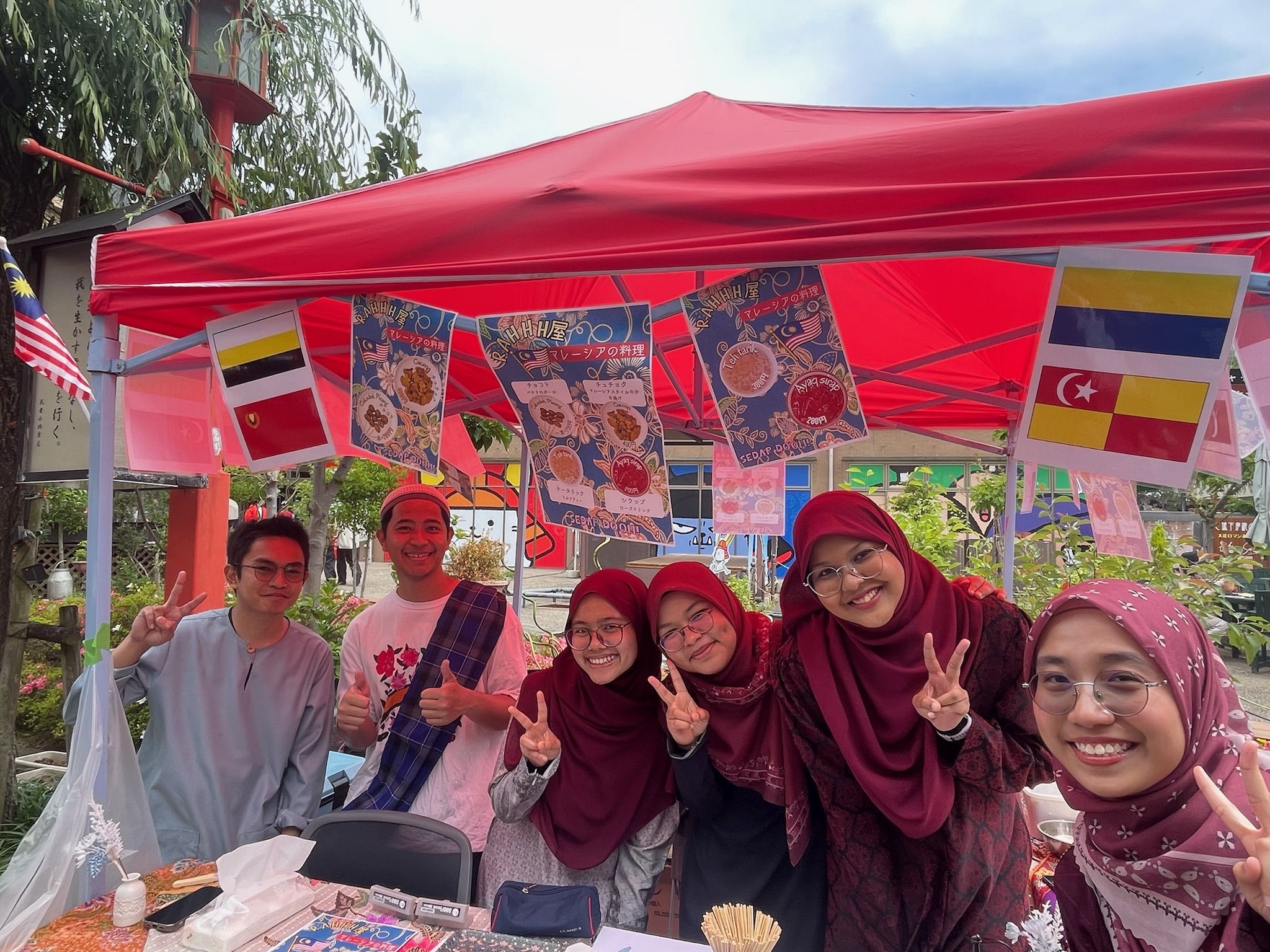
A Taste of Malaysia at The Shiga University Festival
Shiga University, Japan - For students all around the world, university festivals are more than just annual celebrations, they are opportunities to share their culture, build friendships, and create lasting memories. For Malaysian students at Shiga University, participating in the university festival has become a cherished tradition that they never miss.
This year on the 31st of May, a group of Malaysian students introduced visitors to the vibrant culture of Malaysia through their stall, RAHYA. The stall's name was a creative combination of the names of all the team members, while also serving as a play on the word Raya, one of Malaysia's biggest festive celebrations. Reflecting the festive spirit, the stall featured a striking red theme and was decorated with Malaysian state flags and colourful batik fabric.
One of the organisers, Ariqah Sarah, shared her experience of planning and running the stall. From the early preparations to the emotional closing of what would be her final university festival.
Preparation for the festival began long before the event itself. The team spent time researching ideas and carefully planning a menu that would introduce authentic Malaysian flavours to Japanese visitors while remaining simple to prepare. Their menu featured popular Malaysian snacks and drinks, including cekodok (banana fritters), cucuk (Malaysian-style skewered snacks), teh tarik, and refreshing air sirap. According to Ariqah, they also modified the presentation of some dishes to make them more appealing and convenient for customers. For example, the banana fritters were served on skewers, similar to Japanese dango, making them easier to enjoy while walking around the festival.
Besides serving food and drinks, the team actively introduced Malaysian culture to festival-goers. They explained the stories behind each menu item and organised a bunka taiken (cultural experience), allowing Japanese visitors to try wearing the hijab and learn more about Malaysian customs.
When asked about the highlights of this year's festival, Ariqah said the food received an overwhelming response from visitors. Their creative presentation of the snacks helped attract customers, while the cultural experience gave Japanese visitors a chance to engage directly with Malaysian traditions.
Despite the successful outcome, organising the stall was not without challenges. The team consisted of only six members, meaning everyone had to take on multiple responsibilities throughout the day. They had to prepare food continuously, serve customers, explain the menu, manage cultural activities, and promote the stall, all with very little opportunity to rest.
"It was difficult because we didn't have enough manpower," Ariqah explained. "We were constantly preparing food while trying to attract more visitors." Even so, the team's creativity and determination helped them overcome these obstacles and deliver a memorable experience for festival-goers.
After the festival ended, Ariqah described her emotions as a mixture of exhaustion and satisfaction. Although physically tired after a full day of work, she felt proud of what the team had achieved. Seeing visitors enjoy Malaysian food and learn about Malaysian culture made all the effort worthwhile.
For Ariqah and her fellow Malaysian students, RAHYA was more than just a food stall. It became a celebration of friendship, teamwork, and cultural exchange, creating memories that will stay with them long after their time at Shiga University comes to an end.